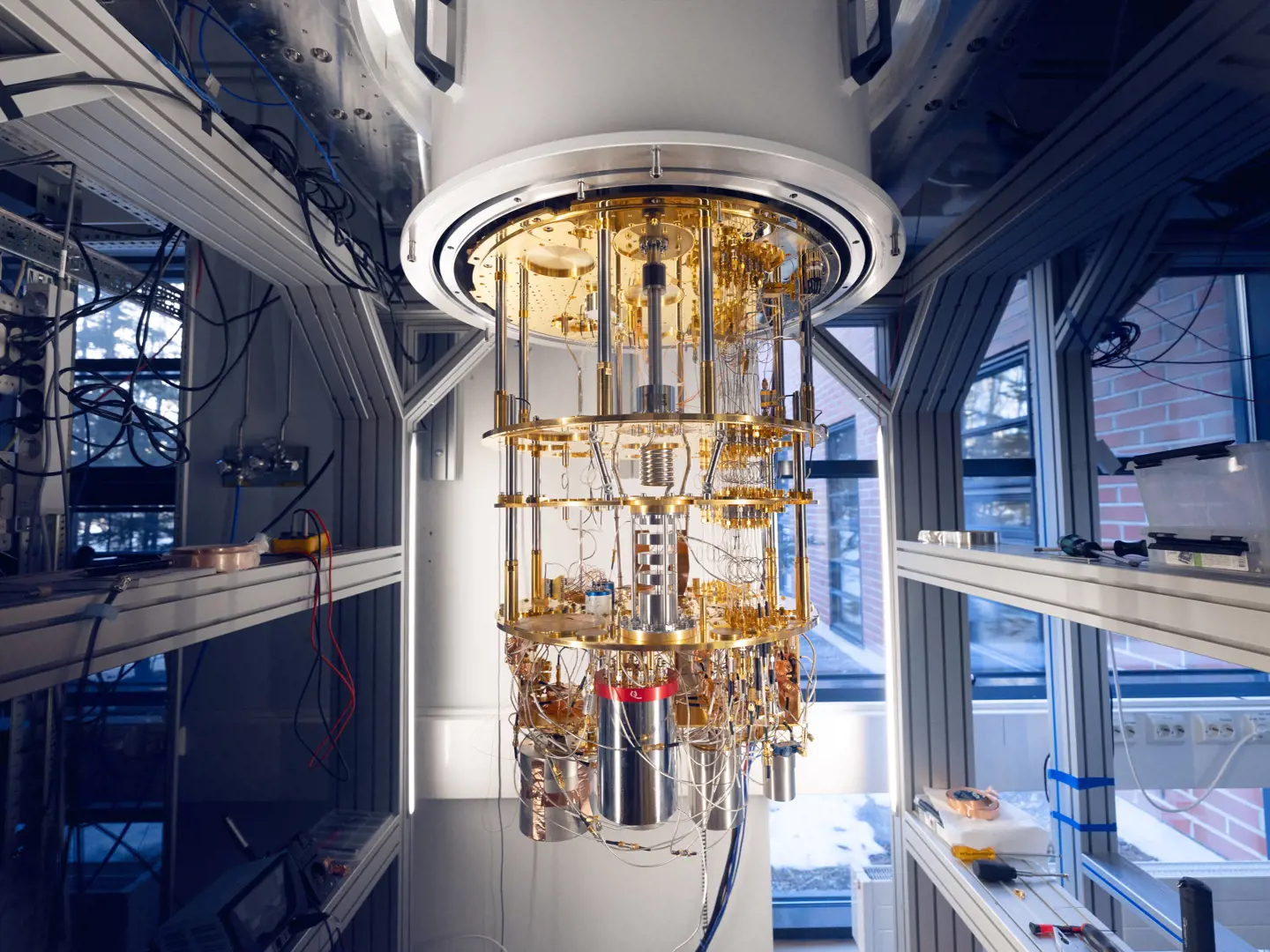
Deep tech and critical technologies
Finland is a well-established environment for developing deep tech and critical technologies, combining robust infrastructure, experienced engineering talent and predictable long-term operations. Companies locate R&D, test solutions in real operating environments and serve European markets from a reliable, low-friction base.
AI in industrial systems
AI in industrial systems
AI development in Finland is tied to systems already running in industry, energy, mobility and health. Companies combine national computing resources with real operating environments. Models are tested where they are used. Not just where they are trained.
Why Finland
- Finnish Center for Artificial Intelligence (FCAI) linking universities and companies for research
- Broad enterprise AI use in manufacturing and services
- Physical AI expertise connected to electronics, sensors, and wireless networks
- LUMI supercomputer operated by CSC (IT Center for Science) for AI training and simulation
What companies do in practice
- Train models on national high-performance computing resources
- Deploy AI in various systems and machines like elevators, port solutions, energy grids, and factories
- Run on-device inference in sensors and machinery
- Test systems against EU AI Act requirements
Advanced semiconductors and photonics
Advanced semiconductors and photonics
Finland is a leading hub for semiconductor, microelectronics, and photonics investment. Firms benefit from a stable environment, skilled talent, and low-cost, clean electricity. The ecosystem combines global expertise in semiconductor design, advanced processes, sensors, MEMS, photonics, and power electronics.
Why Finland
- Attractive business environment with long-standing stability, IP protection and transparent regulation
- Highly skilled talent with decades of semiconductor, photonics and wireless technology expertise
- Reliable infrastructure, competitive electricity prices and one of the world's cleanest energy systems
- Strong capabilities in RF, wireless, ASIC and SoC design
- Global leadership in Atomic Layer Deposition (ALD) and advanced materials technologies
- Strength in MEMS, sensors, photonics, imaging and power electronics
- Pilot production and industrial manufacturing capabilities supporting scale-up
- Access to EU Chips Act pilot lines and European semiconductor initiatives
What companies do in practice
- Collaborate with universities, VTT and industry partners on R&D and pilot projects
- Design RF, ASIC and SoC solutions for wireless, sensing and connectivity applications
- Develop technologies for 5G, 6G, satellite communications and industrial connectivity
- Prototype MEMS, sensors, photonics and integrated semiconductor solutions
- Develop power semiconductors and power electronics technologies
- Innovate new materials, ALD-based processes and advanced manufacturing methods
- Scale innovations through pilot production and commercial manufacturing
Data center operations and energy integration
Data center operations and energy integration
Finland hosts hyperscale, colocation, and high-performance computing (HPC) data centers serving European and global users. Energy costs, grid reliability, and climate conditions remain predictable over time, safeguarding long-term operations.
Why Finland
- Among the lowest industrial electricity prices in Europe
- Reliable, largely carbon-free energy supply
- Proofpoint: existing hyperscale investments by Google, Microsoft, and others
- Direct subsea cable connections to Central Europe
What companies do in practice
- Build and operate hyperscale or co-location facilities
- Connect waste heat to city heating systems
- Access EU markets with low latency
- Run AI and HPC in data centers close to the energy production
Defense and dual-use technology development
Defense and dual-use technology development
Finland offers a working environment for defense and dual-use technologies within the EU and NATO frameworks. Civilian and military users share development, testing and procurement structures. This allows technologies to be validated under realistic conditions.
Why Finland
- NATO membership and access to EU defense funding
- Test areas for drones, autonomous systems, and electronic warfare
- Industrial base across sensors, communications, vehicles, and space
- Clear licensing and export control processes
- Strong dual‑use pathways
What companies do in practice
- Test drones and autonomous platforms in the Arctic
- Build secure communications and situational awareness tools
- Run pilots with the defense and border authorities
- Scale production for EU and NATO markets
Industrial automation and robotics systems
Industrial automation and robotics systems
Automation and robotics solutions are developed alongside industrial operations in mining, ports, factories and utilities. Systems are tested in live environments, not separate labs. Validation happens early, and deployment follows more smoothly.
Why Finland
- Industry 4.0 installations in mining, ports, factories, and utilities
- Engineering expertise in control systems, software, and machinery
- Testbeds for autonomous logistics, ports, and production lines
- Availability of technicians and engineers for commissioning, operation, and maintenance
What companies do in practice
- Build robotics and control software
- Install systems in factories and terminals
- Combine sensors, connectivity, and AI
- Validate solutions with multinational customers
Quantum computing R&D and infrastructure
Quantum computing R&D and infrastructure
Finland has innovative companies and research at all layers of the quantum stack, from hardware to algorithm and application development. Firms can use shared quantum computers and high-performance computing (HPC), including the LUMI supercomputer, lowering the threshold for entry into quantum development and testing.
Why Finland
- A dynamic ecosystem
- A national quantum strategy with over EUR 100 million in public funding
- Quantum computers installed at VTT and connected to CSC’s LUMI supercomputer
- Supporting photonics and cryogenic solutions are developed in Finland
- Research and training at leading Finnish universities
What companies do in practice
- Install and test quantum processors and control electronics
- Run hybrid quantum–HPC workloads on LUMI
- Develop quantum algorithms for optimization, new materials development, and simulation
- Build quantum software alongside hardware teams
Space technology and space-based data
Space technology and space-based data
Finland combines satellite technologies, advanced sensing, AI, imaging technologies, secure communications, and data analytics in a highly collaborative innovation ecosystem. Companies can develop space systems, build data-driven services, and create new applications using space-based data.
Why Finland
- End-to-end space value chain capability covering satellites, sensing, data pipelines, and applications
- Strong track record in Earth observation, imaging, sensor design, AI and ML, wireless systems, cybersecurity, and embedded software
- Established collaboration across industry, research institutes, and the public sector
- Direct partnerships with universities and VTT that shorten the path from research to market
- Participation in ESA programs and joint R&D projects
- Public R&D funding that backs new technologies, products, and business models
- Deep engineering culture and experienced talent focused on long-term deep tech development
What companies do in practice
- Design and manufacture satellite systems and subsystems
- Develop sensors, imaging payloads, and onboard software
- Operate Earth observation and data-driven service platforms
- Apply AI and analytics to satellite and sensor data
- Combine space-based and terrestrial data sources
- Develop communications, security, environmental monitoring, and industrial applications
Wireless networks, 5G and 6G R&D
Wireless networks, 5G and 6G R&D
Finland hosts long-term work on radio and network technologies, including early research on future standards. Development is steady. Research carried out in Finland feeds directly into international wireless standards.
Why Finland
- Long-standing expertise in wireless technologies, led by Nokia
- 6G Flagship research program led by the University of Oulu
- National research organizations leading the 6G Test Network
- Highly skilled talent in wireless technologies and SoC design
- Private 5G networks across ports, factories, and mines
- Active role in international wireless standards development
What companies do in practice
- Develop radio hardware and network software
- Develop next generation modem technology and simulation equipment
- Test private and public networks
- Participate in standards and interoperability trials
- Combine networks with edge computing
XR and 3D systems for industry and training
XR and 3D systems for industry and training
XR (extended reality) in Finland builds on strengths in game engines, photonics and embedded system development, supporting both AR (augmented reality) overlays and fully virtual training and simulation (VR). So less theory, and more application.
Why Finland
- Strong base in game engine and 3D software development
- Photonics supply chain backed by AI, ARM, and embedded talent
- National XR and metaverse research initiatives
- Established use of XR in industrial environments
What companies do in practice
- Build AR and VR devices and components
- Create digital twins for factories and equipment
- Test XR tools with industrial and educational institutions
- Integrate XR into existing industrial and enterprise workflows
Our industry team is here to answer your questions
Janne
Kari
Head of Industry, ICT & Digitalization
Kimmo
Aura
Senior Advisor, Defense
Hanna
Hyttinen
Senior Advisor, ICT & Digitalization
Jouni
Salonen
Senior Advisor, Data centers
Jöns
Tuomaranta
Senior Advisor, ICT & Digitalization