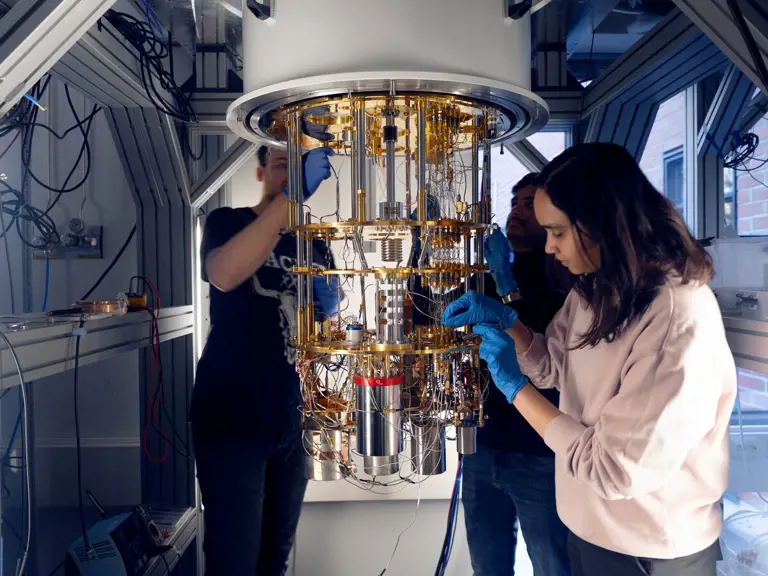
Bluefors, whose cryogenic refrigeration systems are used throughout the global quantum computing sector, and Verda, which grew from a Helsinki startup into a unicorn AI infrastructure provider within six years, developed in very different industries.
Both companies drew on the same mix of engineering talent, research institutions, specialist facilities and growth capital. Similar conditions have helped Finland produce a steady stream of companies that compete in global markets where technical expertise matters.
For executives deciding where to establish an R&D center, recruit specialists, test new technologies or build a European base, Finland provides a useful example of how that framework operates in practice.
From consumer apps to quantum computers
The first generation of internationally recognized Finnish growth companies was largely associated with software and digital services.
Rovio and Supercell demonstrated how founders in a small market could build products used around the world. More recent Finnish growth companies operate in sectors where development cycles are longer, technical requirements are higher and physical infrastructure plays a central role.
Bluefors grew from research conducted at Aalto University’s Low Temperature Laboratory into a company supplying cryogenic systems to quantum computing programs worldwide. IQM builds superconducting quantum computers. ICEYE operates one of the world’s largest synthetic aperture radar satellite constellations. Verda develops and operates AI computing infrastructure designed for data-intensive workloads.
Finland is supercharging all of the needed elements through deeply integrated ecosystems.
Building companies in these sectors requires access to research facilities, specialist engineers, testing infrastructure, manufacturing expertise and long-term funding. Finland has accumulated those assets over several decades through universities, research organizations, industry and public investment programs, supercharging all of these elements through deeply integrated ecosystems.
A route from laboratory to market
In Espoo’s Otaniemi district, Aalto University and VTT Technical Research Centre of Finland sit within walking distance of one another. Researchers, engineers and founders move between those organizations, research programs and new companies on a regular basis.
The process is structured to help research reach commercial markets.
Aalto University uses standardized technology transfer frameworks that define licensing and ownership arrangements before a company is created. VTT operates VTT LaunchPad, which transfers intellectual property into new ventures and continues investing alongside private investors.
Through programs such as Research to Business, Business Finland helps research teams build prototypes, assess commercial applications and secure intellectual property.
The output is measurable. During 2025, six VTT-originating companies raised a combined €445 million in funding. The group included IQM, TactoTek, Onego Bio, Volare, Steady Energy and SemiQon.
Funding is available before companies seek venture capital. Through programs such as Research to Business, Business Finland helps research teams build prototypes, assess commercial applications and secure intellectual property. Finland’s R&D funding legislation commits the country to increasing research and development spending to 4% of GDP by 2030, providing a long-term framework for companies planning multi-year development programs.
As companies grow, Finland’s state-owned investment company Tesi invests alongside domestic and international investors in larger funding rounds. That support has contributed to the growth of companies including Verda, ICEYE and IQM.
Why international companies choose Finland
The strongest endorsement of any location comes from companies that choose their investment targets carefully.
- Swedish defense and aerospace company Saab established its technology center in Tampere to access engineering talent and expertise developed through Finland’s telecommunications sector. What began as an R&D operation has expanded into development and manufacturing activities supporting programs used internationally.
- Brazil-based Beontag selected Tampere for a major RFID and IoT research facility.
- Indian technology company Tech Mahindra chose Espoo as the location for its Nordic innovation center focused on technologies including AI and quantum computing.
- Google has continued expanding its Finnish presence and announced an additional €13 billion investment in Finland in 2026, further increasing its capacity to support AI and digital services operations.
These investments span defense, digital infrastructure, industrial technology and advanced manufacturing. Together they show that companies from different sectors and countries have reached similar conclusions about Finland’s technical capabilities and operating conditions.
Engineering depth across multiple industries
Many countries produce large numbers of graduates. Finland’s workforce stands out for its concentration of specialist technical expertise.
According to the latest TechSkillsAtlas research, Finland has approximately 219,000 engineering professionals currently working in technical roles and another 178,000 ICT specialists. The research identified expertise across 61 engineering specializations, including microelectronics, autonomous systems, satellite technologies, manufacturing, energy systems and advanced materials.
The country’s industrial history remains visible throughout that talent base. Engineering expertise developed through telecommunications, shipbuilding, forestry, manufacturing and energy industries now supports emerging sectors including quantum technologies, AI infrastructure, defense systems and space technologies.
Finland’s industrial history remains visible throughout that talent base.
The talent pipeline continues to expand. Finland produces approximately 31,000 engineering graduates and 9,000 ICT graduates each year. More than one-third of engineering professionals work for foreign-owned companies, demonstrating that international employers already recruit extensively from the Finnish labor market.
Talent is also geographically distributed. Helsinki, Espoo and the wider Uusimaa region contain the largest concentration of specialists, while Tampere, Turku and Oulu each provide substantial technical workforces with their own industrial strengths.
Testing technologies in real operating conditions
Research and development do not end when a prototype works in a laboratory. Finland provides access to operating environments where companies can test technologies in real-world conditions.
Autonomous vehicle developers have used Finnish roads to evaluate driverless systems in snow, ice and low-temperature conditions. Maritime technology companies have access to autonomous shipping initiatives and testing programs developed through the One Sea collaboration. Smart port projects have created opportunities to trial automation and digital logistics systems in active commercial environments.
Companies developing AI applications and computationally intensive technologies can access the LUMI supercomputer in Kajaani, one of Europe’s leading high-performance computing platforms. Semiconductor and quantum technology developers can work with facilities such as Micronova and the expanding Kvanttinova program, which provide fabrication, testing and research capabilities that would be expensive for companies to build independently.
Built for international markets
A company headquartered in Finland often expands beyond the domestic market early. The country's population of 5.6 million people has encouraged generations of founders to build companies with international customers and export markets in mind.
Bluefors generates more than 90% of its revenue outside Finland. Verda established operations in London and San Francisco while maintaining its engineering base in Helsinki. ICEYE acquired customers across Europe, North America and the Indo-Pacific region.
In Finland, researchers, engineers and founders routinely develop products for international markets from the beginning.
International capital follows the same pattern. Roughly 72% of startup funding in Finland comes from foreign investors, while Slush, a startup and tech event, brings global venture capital firms and institutional investors to Helsinki each year.
The result is a setting where researchers, engineers and founders routinely develop products for international markets from the beginning.
The conditions behind repeat success
The emergence of companies such as Bluefors and Verda reflects the combination of factors that has been developing for years.
Researchers at Aalto University and VTT generate technologies that can be transferred into companies for commercial application by the private sector. Business Finland funds early development work. Tesi and private investors support growth. Facilities such as Micronova, Kvanttinova and LUMI provide access to specialized infrastructure. Engineering talent flows from universities, industry and international recruitment channels.
For companies evaluating locations for R&D, technology testing, specialist recruitment or European operations, those resources are available today. The same conditions that helped produce quantum computing suppliers, AI infrastructure companies and satellite operators continue to attract international manufacturers, technology firms and research programs.
In sectors where commercial success depends on engineering expertise, testing facilities, access to talent and long-term technical development, Finland has assembled a constellation of assets that few countries of similar size can match.