Kvanttinova: Finland’s edge in semiconductors, photonics and quantum
A deep-tech hub in Espoo is helping turn breakthroughs in semiconductors, photonics and quantum technology into commercial businesses. By bringing researchers, startups and industry together around shared infrastructure, Kvanttinova is attracting international attention.
In brief
- Kvanttinova is a deep-tech research and innovation hub in Espoo, Finland, focused on semiconductors, photonics and quantum technologies.
- The ecosystem brings together VTT, Aalto University, startups and industry, supported by shared research and cleanroom infrastructure.
- Companies can access specialized expertise and facilities, including Micronova, the Nordic region’s largest micro- and nanotechnology cleanroom, helping reduce the cost and time required to develop advanced technologies.
- For international companies, the ecosystem offers opportunities for R&D, technology partnerships and collaboration within Finland’s growing deep-tech sector.
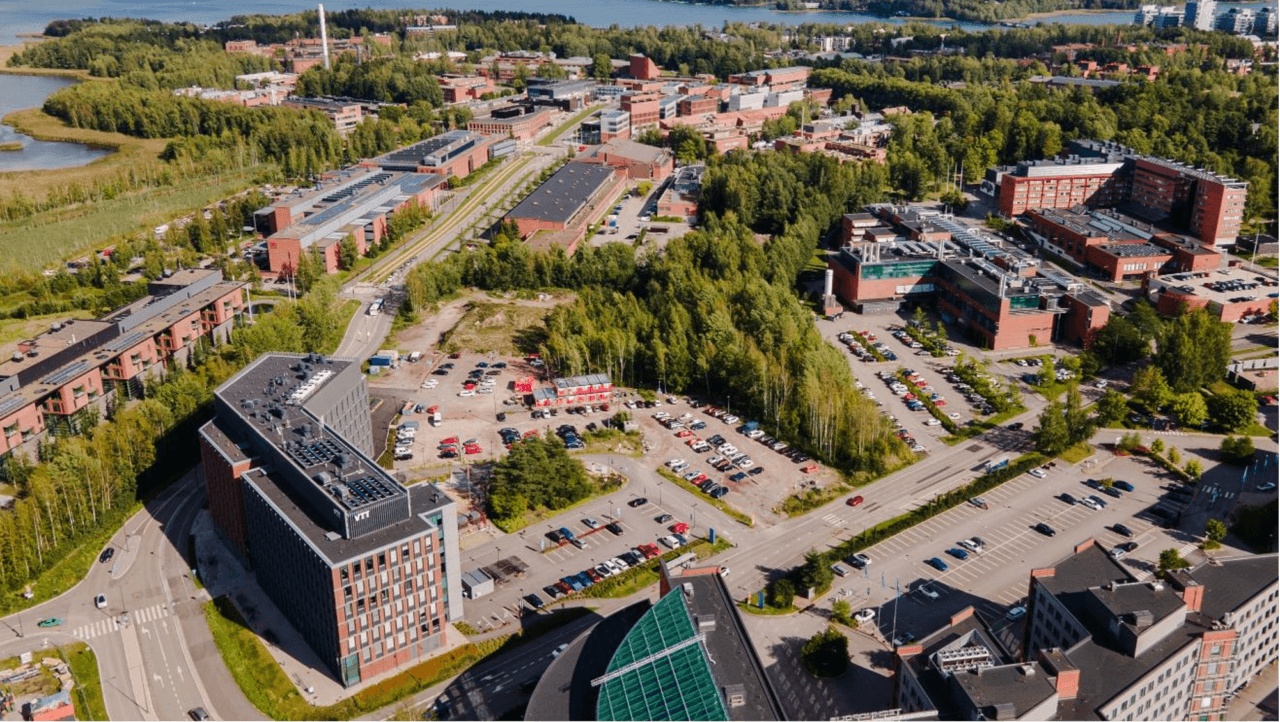
Otaniemi occupies only a few square kilometers on Helsinki’s western edge. Within that area sit Aalto University, VTT Technical Research Centre of Finland, the Nordic region’s largest micro- and nanotechnology cleanroom, fast-growing deep-tech companies and the researchers behind some of the country’s most commercially successful technologies.
Companies developing semiconductor technologies, photonics, quantum computing systems, and advanced manufacturing processes can access expertise, facilities, and industrial partners within walking distance. At the center of that network is Kvanttinova, a hub designed to help scientific research become commercial business more quickly.
For international executives evaluating where to establish research operations, access emerging technologies or build strategic partnerships, Kvanttinova provides an example of how deep-tech ecosystems can succeed when infrastructure, talent and industry grow together over decades.
Why Micronova gives Finnish deep-tech startups an edge
“Kvanttinova is a research and innovation hub focused on semiconductors, photonics and quantum chips,” says Erja Turunen, who leads ecosystem activities at VTT. “It brings together VTT, Aalto University and companies.”
That environment is built on the foundations of Micronova, the Nordic region’s largest micro- and nanotechnology cleanroom facility. It gives researchers and companies access to the specialized equipment needed to design, fabricate and test advanced chips. For deep-tech startups, this can save millions of euros in upfront investment and significantly shorten development timelines.
“This is unique in Finland and the advantage of having a small but closely knit ecosystem.”
One company benefiting from that access is SemiQon, a Finnish startup developing ultra-low-temperature electronics for quantum computers. Its chips are designed to operate in the extreme cryogenic environments required by next-generation quantum systems, an area where performance, precision and speed of development matter.
For Himadri Majumdar, CEO of SemiQon, access to Micronova was a major factor in building the company in Finland. “Having the Micronova manufacturing facility is a unique and one-of-a-kind opportunity,” he says. “It gives us a very strong competitive advantage globally.”
The making of Finland’s deep-tech capital
The foundations of today’s ecosystem stretch back several decades. According to Jaana Tuomi, CEO of Enter Espoo, a series of developments, supported by sustained investment and coordination across the public and private sectors, transformed Otaniemi from a university campus into one of Europe’s most concentrated deep-tech clusters.
One was the creation of Aalto University, which combined technology, business and design disciplines within a single institution. Another was the evolution of VTT, which strengthened its focus on commercialization. A third was the wave of entrepreneurship that followed Nokia’s restructuring, when experienced engineers and technologists founded startups of their own.
“All those together created something unique,” says Tuomi. “We got huge amounts of deep knowledge from Nokia, talented students, a culture change in VTT and strong support from the city.”
Today, that concentration includes startup communities, multinational companies, research organizations and specialized facilities that support everything from microelectronics and photonics to quantum computing and space technologies. The density of expertise is one reason why Finland performs strongly in areas such as patents and deep-tech company creation.
What density beats size
Many countries are investing heavily in semiconductors and quantum technologies, but Finland’s advantage comes less from scale and more from density.
For SemiQon, the attraction was a combination of expertise, infrastructure, talent and timing. The company could access manufacturing facilities, research knowledge and potential customers within a tightly connected ecosystem. “This is unique in Finland and the advantage of having a small but closely knit ecosystem,” says Majumdar.
He adds that the combination of infrastructure, expertise and talent available within a small geographic area helped the company move faster and at lower cost than it could have elsewhere. This allows unique market access,” he says. “It allows us to develop products earlier and faster than our competitors.”
Turunen sees the same trend from a wider ecosystem perspective. International companies increasingly seek partnerships with Finnish organizations involved in semiconductors and quantum technologies, and VTT works alongside leading European research organizations, including Belgium’s imec, a major semiconductor R&D center; Germany’s Fraunhofer Society; and France’s CEA-Leti, which specializes in microelectronics, photonics and nanotechnology.
Trust, access and open innovation
Most technology clusters contain universities, startups and investors. What makes Otaniemi harder to reproduce is the ease with which people move between those groups. Researchers collaborate with companies. Startups access facilities originally built for research. Public organizations, universities and industry regularly work on shared projects.
“We call it radical multidisciplinary collaboration,” says Tuomi. “Open innovation is at the core of everything we do.” Finland’s relatively flat organizational culture also plays a role. Partnerships often begin through direct conversations rather than lengthy formal processes.
“Partnerships are easily born here,” adds Tuomi. “It’s easy to access leaders and suggest ideas.” Turunen describes the semiconductor and quantum community in similar terms. “We are almost like a country club,” she says. “Everyone knows each other. It’s quite easy to create that level of trust.”
Turning research into global deep-tech companies
The ecosystem’s ambitions extend well beyond scientific research. A major goal is to create companies that can grow into global businesses anchored in Finland, and the results are already becoming visible.
VTT-originated spinouts raised €445 million in equity funding during 2025, including significant rounds secured by companies such as IQM, TactoTek and SemiQon. Turunen says helping startups grow remains one of VTT’s highest priorities.
“Open innovation is at the core of everything we do.”
“We want to make sure that we create new startups and help existing startups to grow,” she says. “Startups need shared infrastructure in order to move further in technology development and scaling.”
Open-access infrastructure is particularly important because many deep-tech companies depend on equipment that costs millions of euros. In Espoo, qualified companies can use facilities directly rather than purchasing expensive machinery themselves. This lowers early development costs and allows smaller firms to progress more quickly.
A new phase of industrialization
Kvanttinova is expanding its cleanroom capacity through investments linked to European semiconductor initiatives and Finnish government support. The goal is to advance larger-scale development in semiconductors, photonics and quantum technologies.
At the same time, demand is growing rapidly. VTT employs specialists representing more than 60 nationalities, and Finnish semiconductor companies have set ambitious growth targets that will require significant increases in skilled talent.
Looking ahead, the role of semiconductors, photonics and quantum technologies is expected to grow. Finland’s international profile is also likely to rise as more companies emerge from the ecosystem and attract global customers, investors and talent.
Yet awareness still lags behind the ecosystem’s achievements. Tuomi notes that a common reaction from international visitors is simple: “Why haven’t I heard about this earlier?”
The answer lies in the way the ecosystem around Kvanttinova has been built. Rather than relying on a large domestic market, Espoo has spent decades investing in research, shared infrastructure, commercialization and education, creating the conditions for deep-tech companies to emerge and grow.
For international companies looking to participate in the next generation of semiconductor, photonics and quantum technologies, that combination makes Finland an increasingly difficult place to ignore.